

Can Intelligence Truly Exist Without Consciousness?
A Neuroscientific Look at What Separates Us from AI

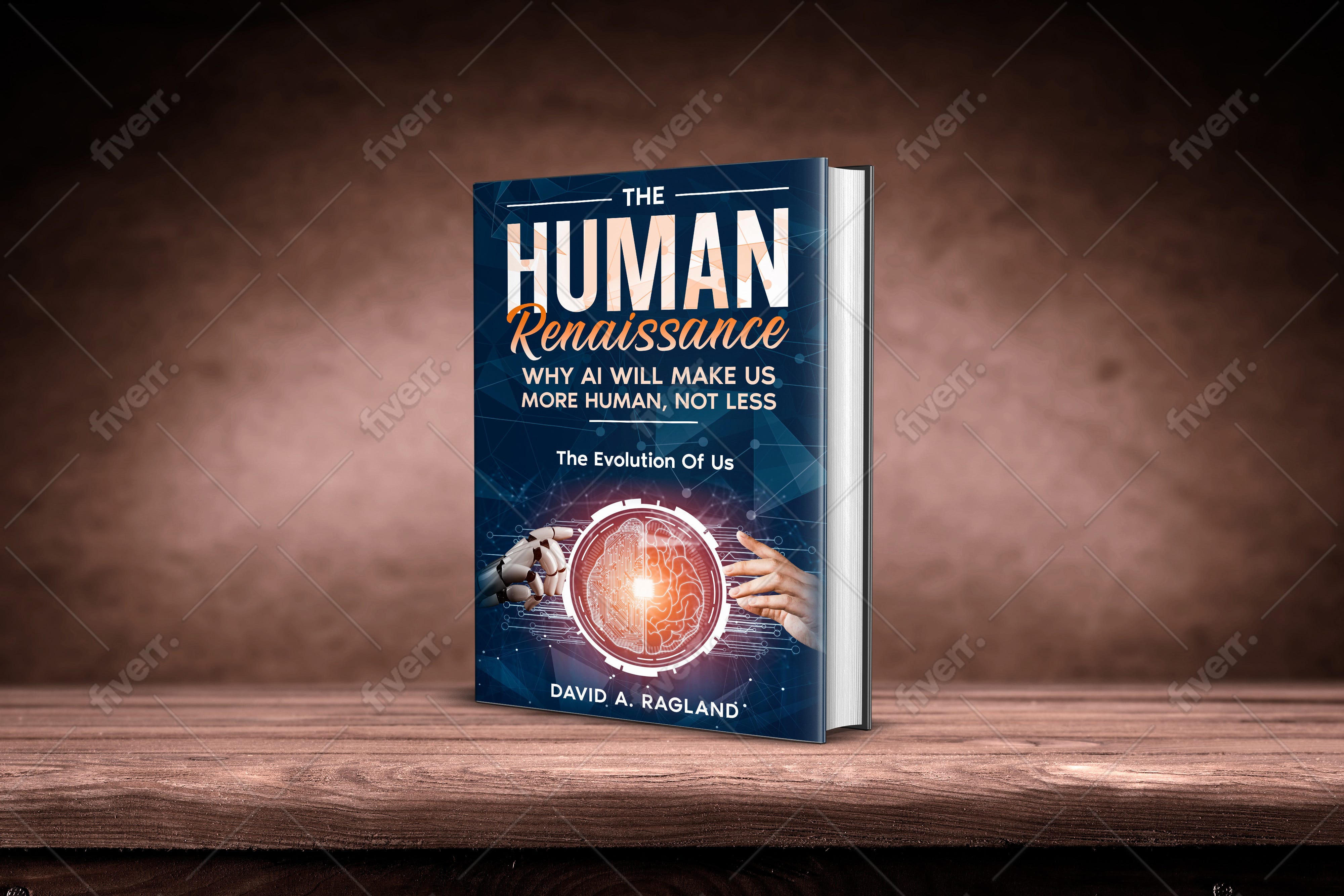
Below is an excerpt from The Human Renaissance, Why AI Will Make Us More Human, Not Less. AVAILABLE HERE ON AMAZON
This isn’t another book about AI—it’s about what makes us unique as humans.
A uniqueness that will grow in value, not shrink, as AI advances.
If consciousness is the most enigmatic aspect of human existence, then intelligence—our ability to reason, learn, and solve problems—stands as its more tangible counterpart. But are the two inseparable? Could intelligence ever exist without true consciousness, or is self-awareness merely an evolutionary byproduct of cognition?
This question becomes all the more pressing as artificial intelligence continues to demonstrate capabilities once thought to be uniquely human—even exhibiting forms of strategic reasoning. Yet again, for all its sophistication, AI remains fundamentally different from us in one crucial way—it doesn’t experience what it does.
This brings us to the heart of the debate: Is intelligence, as we understand it, possible without the biological substrate (i.e., the physical medium—like the human brain—that supports and enables cognition)? If machines can replicate or even exceed human intellectual functions, does this mean they possess a form of intelligence akin to our own? Or is there something intrinsic to the human brain—its structure, its chemistry, its embodied nature—that AI fundamentally lacks?
To explore this, we turn to the intersection of neuroscience and artificial intelligence, examining how human cognition differs from machine learning, and whether AI’s rapid advancement brings it any closer to bridging the gap between intelligence and true awareness. Despite superficial similarities between artificial neural networks and biological brains, they operate on fundamentally different principles. While both rely on pattern recognition and learning, human cognition is shaped by an intricate web of biological processes, chemical interactions, and evolutionary adaptations that AI systems do not possess. The brain is not just a processor of information—it’s a living, self-sustaining organ that integrates sensory experience, emotion, and consciousness into a unified perception of reality.[1]
A key distinction lies in the nature of memory formation and retrieval. Artificial neural networks store and retrieve information in a manner akin to statistical pattern matching. They encode data as weight distributions across nodes, optimizing responses through iterative learning algorithms.[2] By contrast, the human brain operates through complex biochemical pathways, where memory is not merely a stored record but a dynamic process intertwined with emotion, context, and sensory input.[3] A childhood memory of riding a bicycle is not just an abstract concept but a rich, multisensory recollection—visual snapshots of the surroundings, the feeling of the wind, the muscle memory of pedaling, and the subtle influence of fear or excitement. AI, in its current state, doesn’t possess such multimodal, lived experiences; it merely predicts and recombines learned patterns.
Another crucial distinction is the brain’s adaptability. Neuroplasticity allows humans to rewire neural connections in response to experience, learning, and injury, fundamentally altering how cognition develops over time.[4] AI systems, by contrast, don’t self-modify in a way that mirrors human cognitive growth. While machine learning models can be fine-tuned or retrained on new data, they don’t evolve organically in response to experience. A human being who undergoes trauma, for example, may develop an entirely new cognitive framework to cope with reality—AI lacks such existential recalibration.[5]
This leads to an even deeper question: does intelligence require embodiment? Some researchers argue that true cognition can’t be separated from the body’s sensory-motor systems, an idea known as embodied cognition. Human intelligence develops in tandem with bodily interactions—infants learn by touching, tasting, and physically exploring their environment before forming abstract concepts. In contrast, AI exists in a disembodied state, passively processing data with no direct physical engagement with the world. Even robots, while capable of interacting with their environment, do so without the biological imperatives of hunger, pain, or survival that drive human learning and adaptation.[6]
Recent advancements in brain-computer interfaces (BCIs) and neuromorphic engineering seek to bridge the gap between biological and artificial intelligence. BCIs, such as Elon Musk’s Neuralink, aim to create a direct interface between human thought and digital processing, potentially allowing for seamless integration between human cognition and AI capabilities.[7] Meanwhile, neuromorphic computing attempts to design AI architectures that more closely mimic the efficiency and adaptability of biological brains by using specialized hardware modeled on neural circuits.[8] While promising, these technologies remain in their infancy, and no development to date has come close to replicating the depth of human self-awareness.
A final distinction rests on the question of selfhood. Human cognition is not just a function of data processing but of personal experience and subjective reflection. The ability to introspect, to ask “Who am I?” and to understand one’s own place in the world is a hallmark of consciousness. Until AI can exhibit self-awareness, make decisions based on personal experience, and reflect on its own existence, it remains fundamentally distinct from human intelligence.[9] The question, then, is whether AI can ever cross this divide—or whether consciousness, as we know it, is a uniquely biological phenomenon that will forever separate humans from machines.
If you’re intrigued by questions, insights and discussions like these, please consider purchasing the book, available here on Amazon.
About the Author
David Ragland is a former senior technology executive turned researcher, educator, and writer. After leading teams across several multinational firms, he found his true calling in exploring how technology, leadership, and human connection intersect. He is the author of several books, including Classical Wisdom for Modern Leaders: AI and Emotional Intelligence, The Multiplier Effect: AI and Organizational Dynamics, and the forthcoming The Human Renaissance: Why AI Will Make Us More Human, Not Less. He holds a doctorate in business administration from IE University in Madrid, Spain, and a masters in information systems from Johns Hopkins University, as well as a certificate in artificial intelligence and business strategy from MIT. He now writes about the deeper dimensions of work, identity, and meaning in an AI-driven world.
References
[1] Christof Koch, The Feeling of Life Itself: Why Consciousness Is Widespread but Can't Be Computed (Cambridge: MIT Press, 2019).
[2] Geoffrey Hinton, Terrence Sejnowski, and Ronald J. Williams, “Learning Representations by Back-Propagating Errors,” Nature 323, no. 6088 (1986): 533–536.
[3] Antonio Damasio, The Strange Order of Things: Life, Feeling, and the Making of Cultures (New York: Pantheon Books, 2018).
[4] Norman Doidge, The Brain That Changes Itself: Stories of Personal Triumph from the Frontiers of Brain Science (New York: Viking, 2007).
[5] Francisco J. Varela, Evan Thompson, and Eleanor Rosch, The Embodied Mind: Cognitive Science and Human Experience (Cambridge: MIT Press, 1991).
[6] Rodney Brooks, “Intelligence Without Representation,” Artificial Intelligence 47, no. 1-3 (1991): 139–159.
[7] Elon Musk and Neuralink, “An Integrated Brain-Machine Interface Platform with Thousands of Channels,” bioRxiv (2019).
[8] Kwabena Boahen, Neuromorphic Microchips," published in the May 2005 issue of Scientific American (Vol. 292, No. 5, pp. 56–63)
[9] Thomas Metzinger, The Ego Tunnel: The Science of the Mind and the Myth of the Self (New York: Basic Books, 2009).